


According to the NRCA, a well-maintained commercial roof lasts approximately 21 years. A neglected one lasts around 13 years. That is an eight-year gap worth hundreds of thousands of dollars in deferred replacement cost.
Here is the part that surprises most facility managers. The difference usually does not come from one catastrophic failure. It comes from dozens of small problems that were never caught. A clogged drain. A lifting seam. A hairline crack in the flashing around an HVAC curb. Each one manageable on its own, together compounding into a roof that dies years before it should.
That is what preventive maintenance actually prevents. Not drama. Just the quiet accumulation of problems that nobody fixed because nobody was looking.
e data provided by the NRCA.
Why the Same Roof Can Last 13 Years or 21 Years
Two facility managers. Same roof system. Same climate. Eight years apart on service life.
The difference is maintenance. Specifically, whether anyone was catching problems during the inspection window, when they are cheap to fix, or finding them during an emergency call, when they are not.
Think about how this plays out in practice. A flat commercial roof in Pennsylvania deals with ice dams in January, thermal expansion in July, and heavy rain in April and October. Every one of those events puts stress on the same vulnerable points: the seams, the flashings, the penetrations, the drains. After a hard winter, a seam that was 90 percent intact might be 80 percent intact. After another, 65 percent. Nobody notices until water is coming through the ceiling.
Preventive maintenance interrupts that cycle. It is not about fixing things that are already broken. It is about finding things that are almost broken, while fixing them is still a line item in your maintenance budget and not a capital emergency.
That is the math behind the NRCA figure. Twenty-one years is what you get when small problems stay small. Thirteen years is what you get when they do not. NRCA’s commercial roofing maintenance guidance has documented this gap across roof system types for decades.
What a Commercial Roof Preventive Maintenance Program Actually Covers


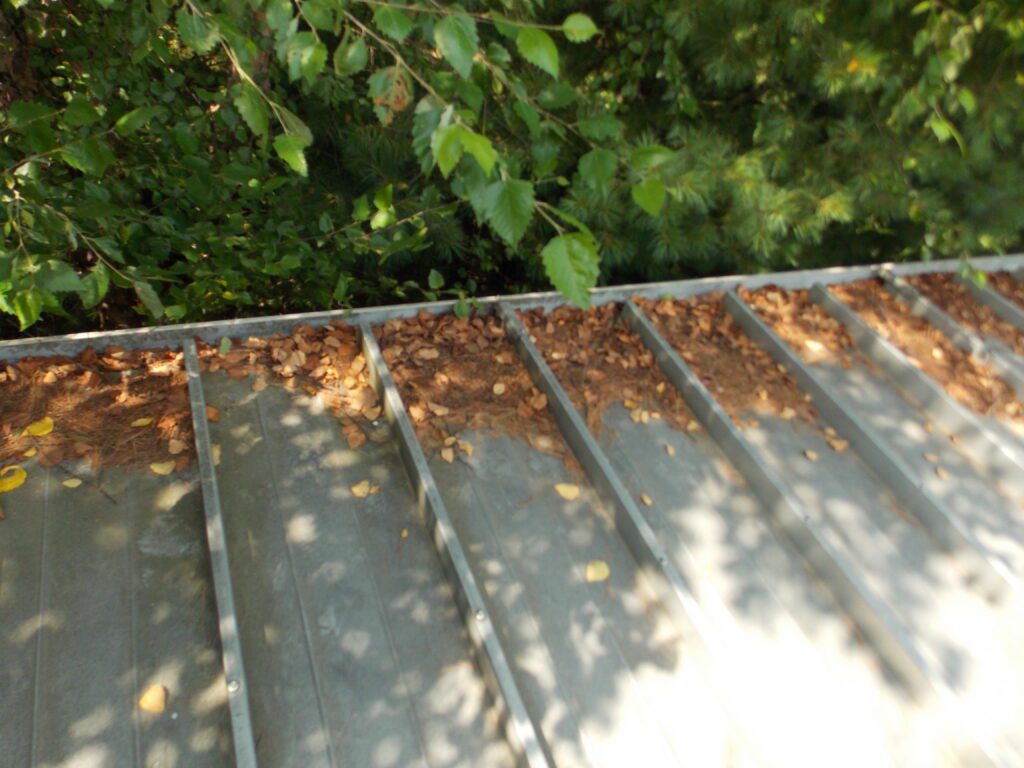

NRCA recommends a minimum of two inspections per year. One in the spring, after your roof has been through winter. One in the fall, before it has to be again. Beyond that baseline, what a program includes can vary. Here is what a thorough one looks like.
Semi-Annual Inspections
A qualified inspector walks the entire roof surface and documents what they find. Not a quick visual from the hatch. A complete walkthrough covering every seam, every penetration, every flashing, every drain. Photos taken. Conditions noted. A written report generated and filed.
The written report matters more than most facility managers realize. It is what keeps your warranty valid. Most commercial roofing warranties have a maintenance requirement buried in the fine print, and without documented inspections, a manufacturer can argue that a warranty claim is the result of neglect rather than a defect. Documentation is protection.
Drainage System Clearing
Interior drains, scuppers, gutters, downspouts. All of it checked and cleared. Ponding water is one of the most common causes of membrane failure on low-slope commercial roofs, and it almost always starts with a drain that is slow but not fully blocked. That is the kind of thing that gets missed unless someone is specifically looking for it.
Seam and Membrane Inspection
For single-ply systems (TPO, EPDM, PVC), seams are checked for lifting, separation, or shrinkage. For modified bitumen and built-up systems, the surface is checked for blistering, splitting, and gravel loss. Anything that is starting to fail gets repaired during the visit, not scheduled for a future call.
This is where the cost savings are most visible. A seam repair during a scheduled inspection might run a few hundred dollars. The same seam, caught after it has failed and water has been getting in for a season, is a different conversation entirely.
Flashing and Penetration Checks
Flashings are the most common failure point on any commercial roof. They are the spots where the membrane meets a wall, a curb, a skylight, a pipe. Every penetration gets checked individually. Sealants that have cracked or pulled away get replaced before water finds the gap.
On a roof with twelve HVAC units, this is not a quick job. But it is the job, because that is where the leaks start.
Repair Documentation and Capital Planning Support
After every visit, you get a written report: what was found, what was repaired, and what needs attention before the next inspection. Over time, that report history becomes something genuinely useful. It is a data set that tells you which roofs are aging well, which ones are approaching the end of their service life, and where to direct capital in the next two to three years.
For facility managers responsible for multiple buildings, that kind of documented history is hard to put a price on.
What Affects the Cost of a Commercial Roof Preventive Maintenance Program
Facility managers ask about cost early in the conversation. That is the right instinct. A maintenance program is a budget line, and it needs to be sized before it can be approved. The factors below drive the number in every case. Understanding them lets you scope a program accurately before you request a proposal.
Roof Size
Square footage is the most straightforward cost driver. A larger roof takes longer to inspect thoroughly, and a thorough inspection is the whole point. Programs for small retail buildings look very different from programs covering a 200,000-square-foot distribution facility. If you are managing a portfolio, the aggregate square footage across all buildings is the most useful number to have ready when you call.
Roof System Type
Not all roof systems require the same level of attention. TPO and EPDM single-ply systems are seam-intensive. Every linear foot of weld or adhesive bond is a potential failure point, and each one gets checked. Built-up and modified bitumen systems require surface condition assessment across the full field. Metal roofing has its own inspection priorities around fasteners, panel seams, and coating integrity. The system type affects both how long the inspection takes and what skill level it requires.
Number of Penetrations and Rooftop Equipment
Flashings and penetrations are inspected one by one. Each HVAC unit, each pipe, each skylight, each rooftop access hatch. A roof with four penetrations and a roof with forty are very different scopes of work, even if the square footage is identical. Manufacturing facilities, hospitals, and multi-tenant commercial buildings with dense rooftop equipment populations see that reflected in the cost of a thorough program. It is not padding. It is the time the work actually takes.
Current Roof Condition and Age
A roof in good condition with a recent installation history is straightforward to maintain. A roof approaching the end of its design life, or one that has skipped several cycles of maintenance, requires more attention during each visit and generates more repair items. Some roofs have deteriorated past the point where a standard maintenance program is the right first call. We have walked roofs where the honest answer is that remediation comes before enrollment. That conversation is better to have upfront than after two inspection cycles.
Portfolio Size and Consolidation
Facility managers responsible for multiple buildings often find that consolidating maintenance under a single contractor produces better per-building economics than managing separate vendor relationships for each property. A contractor who already knows your roof inventory, your documentation history, and your building conditions works more efficiently than one approaching each building cold. It also simplifies reporting, invoicing, and warranty coordination. Most facility managers managing five or more buildings find the consolidation savings material.
Response-Time Guarantee
Some maintenance contracts include a defined emergency response commitment. A guarantee that a crew will be on-site within a specified window if something goes wrong between scheduled visits. Programs that include this carry it into the contract cost. For facility managers who have experienced the alternative, calling a contractor during an active leak and waiting three days for a callback, the value of a written commitment is obvious. You are paying for certainty. It is worth it.
What Deferred Maintenance Actually Costs
There is a tendency to think of deferred maintenance as savings. You did not spend the money. The roof is still up. Budget intact.
But deferred maintenance does not eliminate cost. It rearranges it. Instead of a few hundred dollars per visit, twice a year, you end up paying for emergency repairs, interior water damage, disrupted operations, and a replacement cycle that arrives years ahead of schedule.
According to the Roof Coatings Manufacturers Association, a 25-year commercial roof without adequate maintenance can generate $200,000 or more in additional repair costs over its shortened service life. That is not the replacement cost. That is the accumulation of emergency calls, ceiling damage, and patchwork repairs on a roof that should still have had years of useful life left. ISS Facility Services documents this pattern across their commercial building management research.
There is another cost that does not show up in the repair budget: the emergency response premium. Planned maintenance work is priced as planned work. Emergency calls are priced as emergency work. A problem that should have been caught during an October inspection, found instead in March after it has failed, costs three to five times more to address. That premium is real, and it is avoidable.
For facility managers managing a portfolio of five or ten buildings, the math compounds. Every roof that fails eight years early is a replacement project that did not need to happen yet.
How to Structure a Preventive Maintenance Plan for Your Roof
Here is the structure we recommend, based on NRCA guidance and what we have seen hold up across Pennsylvania and Maryland roofs over eight decades. It applies to TPO, EPDM, modified bitumen, built-up roofing, and standing-seam metal.
- Spring inspection (April through May): post-winter assessment, full drainage clearing, flashing check, seam and membrane review
- Fall inspection (September through October): pre-winter drainage clearing, ponding risk check, penetration reseal where needed
- Written report after each visit: condition photos, complete repair log, deferred items with priority ratings
- Emergency response SLA: define the maximum acceptable response time before you sign a maintenance contract. Get it in writing, not verbally.
- Per-building documentation: if you manage multiple roofs, each one needs its own maintenance file and condition history
Buildings with heavy rooftop equipment, significant foot traffic from maintenance personnel, or membrane systems already 15 years or older are worth putting on a quarterly schedule rather than semi-annual. More touchpoints, earlier catches.
How GSM Roofing Handles Preventive Maintenance Contracts
GSM Roofing has been a commercial roofing contractor since 1946. Same family, same name, same region. In nearly 80 years of continuous operation, we have built the kind of documented roof history on individual buildings that lets us catch problems earlier and advise on capital timing with something more solid than guesswork.
Our Exceptional Roof Protection Plan is a structured maintenance contract for commercial facilities across Lancaster County PA, York PA, Berks County PA, Cecil County MD, Elkton MD, and surrounding markets. It includes a two-business-day emergency response guarantee and written documentation after every visit. We currently manage a portfolio of 50 commercial buildings in the Bethlehem, PA area under this program.
If you want to understand what the plan covers, how it is scoped, and whether it is the right fit for your facility or portfolio, the full detail is on the preventive maintenance page. Or call us directly. Our offices are in Ephrata, PA and Elkton, MD.
Frequently Asked Questions
How long does a commercial roof last with preventive maintenance?
According to the NRCA, a well-maintained commercial roof lasts approximately 21 years. Without a maintenance program, the same roof typically reaches end-of-life around 13 years. That gap applies primarily to low-slope membrane systems, including TPO, EPDM, modified bitumen, and built-up roofing. Metal roofing and specialty systems have different service life profiles, but the core principle holds across all of them: documented, scheduled maintenance consistently extends useful life and reduces total cost of ownership.
What factors affect the cost of commercial roof preventive maintenance?
The main variables are roof size (square footage), roof system type (TPO, EPDM, modified bitumen, metal), the number of penetrations and HVAC units on the roof, the age and current condition of the membrane, the number of buildings in a portfolio, and whether the contract includes an emergency response guarantee. A contractor who has inspected your roof and knows its history will give you a more accurate proposal than one working from square footage alone.
What does commercial roof preventive maintenance include?
A complete program includes semi-annual inspections in spring and fall, drainage clearing, seam and flashing checks, minor repairs completed during the inspection visit, and written documentation with photos after each visit. Some programs also include a defined emergency response commitment between scheduled visits.
How often should a commercial roof be inspected?
The NRCA recommends a minimum of twice per year, in spring and fall. Buildings with heavy rooftop equipment, high foot traffic from trades, or membrane systems older than 15 years may benefit from quarterly inspections. After any significant weather event (heavy snow load, hail, or severe wind) an additional inspection is worth scheduling.
What is GSM Roofing's Exceptional Roof Protection Plan?
GSM’s Exceptional Roof Protection Plan is a structured preventive maintenance contract for commercial facilities in Lancaster County PA, York PA, Berks County PA, Cecil County MD, and surrounding markets. It includes scheduled semi-annual inspections, a two-business-day emergency response guarantee, and full written reporting after every visit.
Does preventive maintenance void my commercial roof warranty?
Most commercial roofing warranties require documented maintenance to remain valid. Having inspections performed by a qualified contractor and keeping written records of those visits protects your warranty, not the other way around. If your warranty language is unclear on the maintenance requirement, GSM can review it with you before you enroll.
Ready to Stop Losing Years Off Your Roof?
Talk to GSM about the Exceptional Roof Protection Plan
If you manage commercial facilities in Lancaster County PA, York PA, Berks County PA, Cecil County MD, or surrounding areas, we would like to talk.
GSM Roofing has been doing this work since 1946. We show up, write it down, and respond in two business days when something goes wrong between visits.
Visit Exceptional Roof Protection Plan to learn what the plan covers and how to get started.